Writer, Director, Producer Emilie Upczak
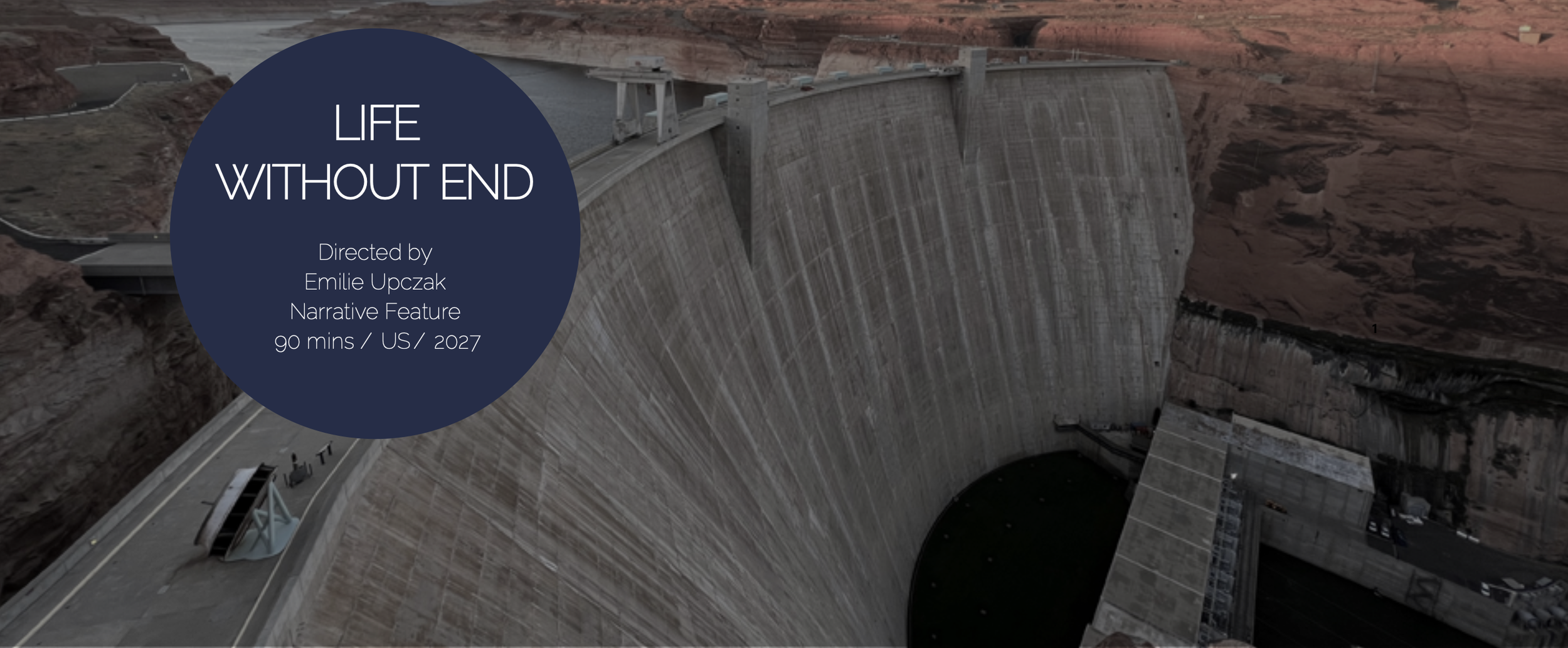
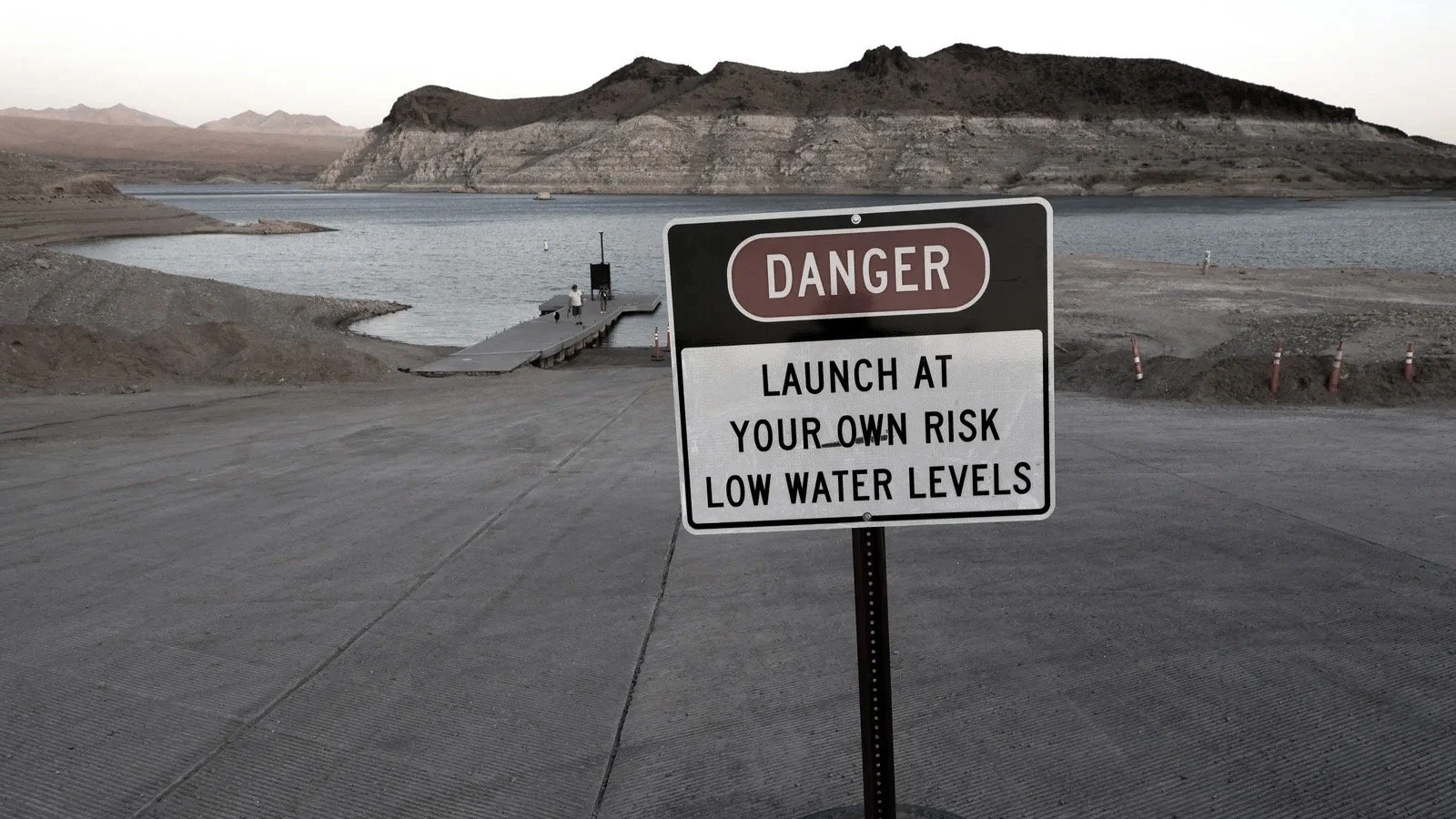
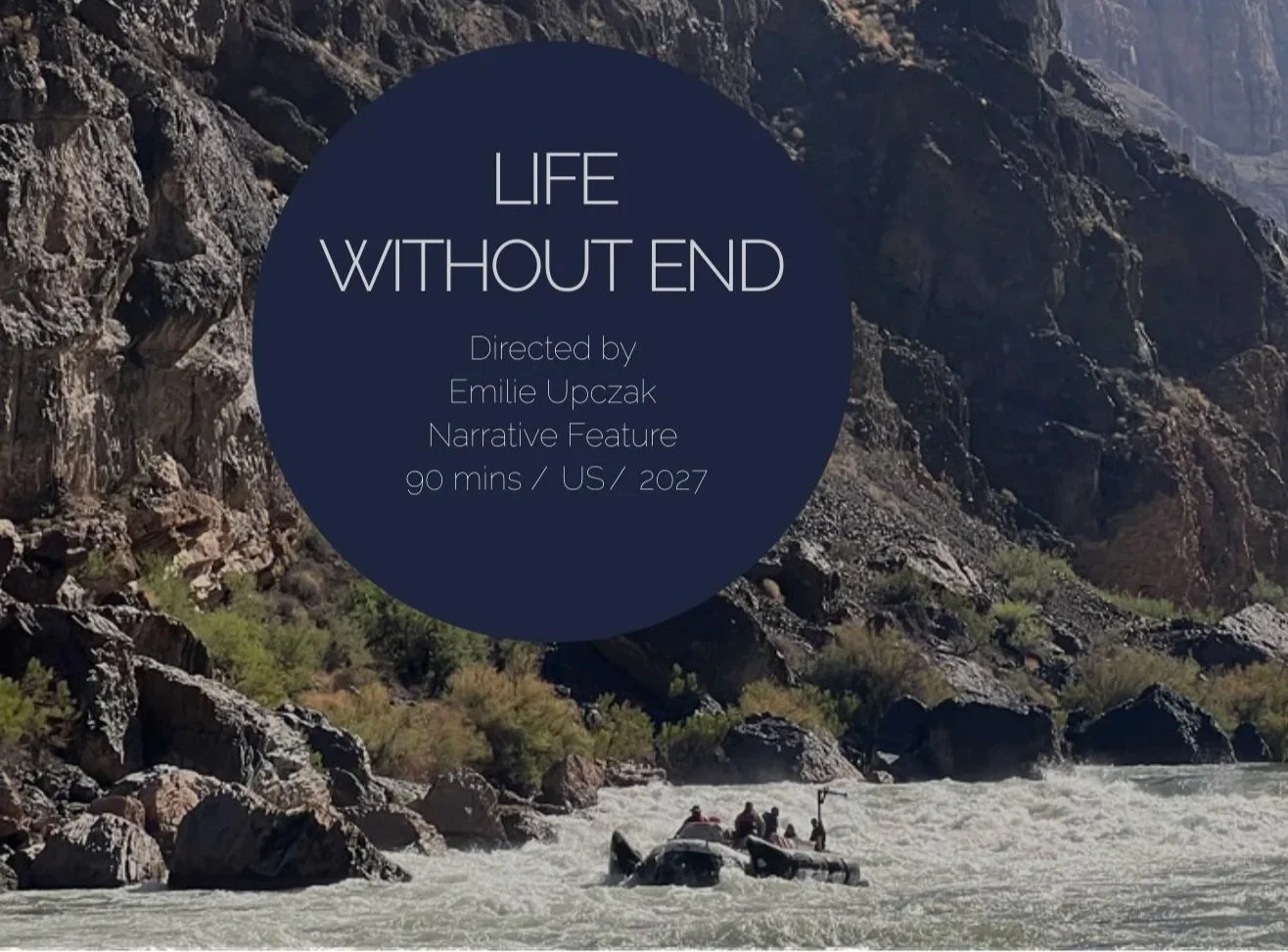
Set in a near-future Southwest ravaged by water and power shortages Emery, a botanist from Navajo Nation, joins two developers on a perilous Colorado river expedition in Grand Canyon, as they seek tribal approval for a controversial dam project. As suspicions grow, mounting tensions and the unpredictability of the river threaten their survival.
Director’s Statement
Growing up in the mountains above Boulder, near the headwaters of the Colorado River, I experienced water scarcity firsthand. My family relied on a shallow well, making access to water a constant concern. Since my childhood, the Colorado River and its tributaries have been integral to my life. I have rafted through Grand Canyon numerous times and spent years researching the river’s past and present.
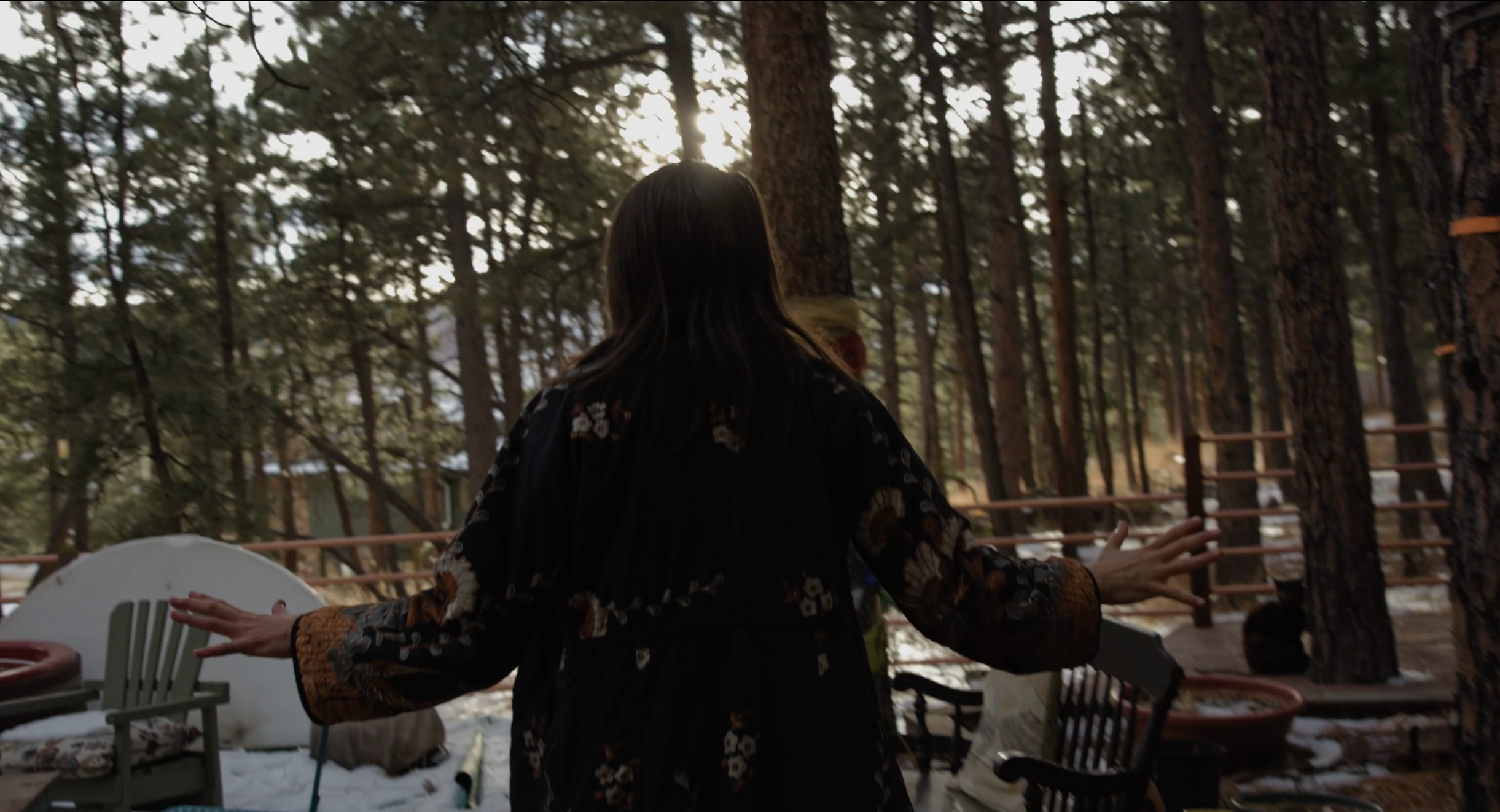
Life Without End is a story grounded in land and memory, offering a timely meditation on environmental reckoning. The camera follows Emery, a woman returning to the place of her youth. The film is bookended by flashback sequences between the protagonist and her aunt that mimic the expansion and distortion of time that occurs when one is immersed in places such as Grand Canyon, which holds more histories than the average visitor can know.
Though four human characters drive the plot forward, the land, the river, the plants, the rocks, and the elements are equal players, evoked by the film’s observational style and pacing. My goal is to visually explore how the land influences narrative structure and ethical inquiry. The film’s emotional core lies in our relationship to land, examining the tension between viewing land and water as a resource to be used for human purposes and understanding land and water as something having its own intrinsic worth.
Rooted in realism, the cinematography will use natural light and long takes, incorporating sweeping landscape shots interspersed with action sequences. The pacing will mirror the environment and the characters’ journey on the river, sometimes slow and quiet, other times fast and loud. This dynamic sense of time and space uniquely reflects the inherent conflict between people and the environment, inviting viewers to surrender control and yield to the pulse of the river. With that in mind, once the characters are on the river, they stay on the river.
Narrative Feature
72’ / 2017 / T&T, US/ Drama
English & Mandarin with English Subtitles
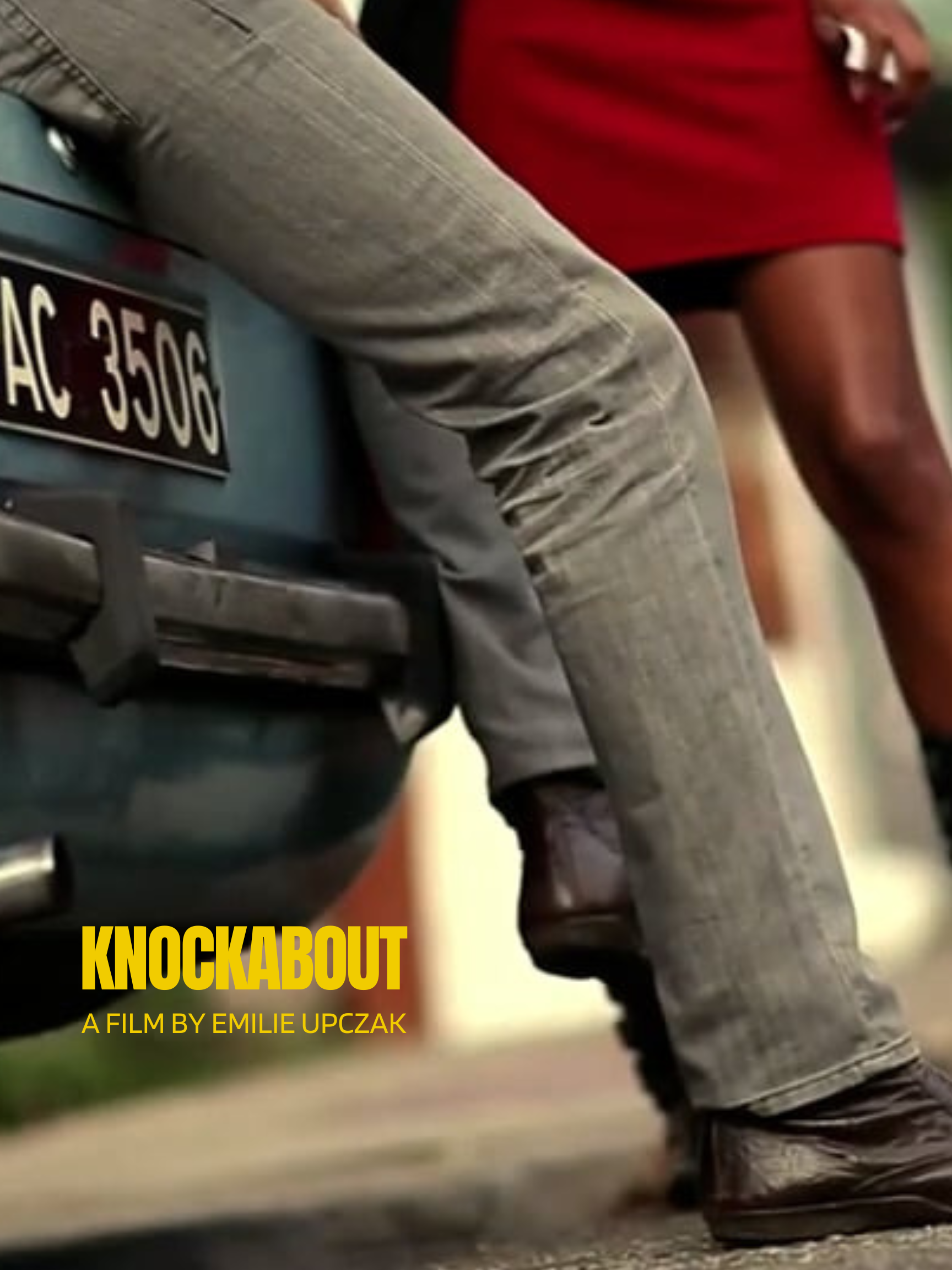
After the death of her father, Zhenzhen is smuggled to the Caribbean island where her brother, Wei, works in construction. Wei gets her a job at a restaurant, but when the smuggler demands more cash, Zhenzhen is forced into a compromising position. Help comes unexpectedly from Evelyn, who runs an art gallery in the neighborhood—but the contrast between the dark rooms above the restaurant and the blindingly white gallery calls everyone’s innocence into question.
Writer, Director, Producer Emilie Upczak
Available on Amazon
IMDB
With a knack for storytelling, director Emilie Upczak has effectively employed an ever-consequential female gaze to look into the subject matter; and in the process, while dissecting the system of sex trade, she succinctly puts her point of view as a strong undercurrent of the narrative.
Manoj Barpujari --fipresci
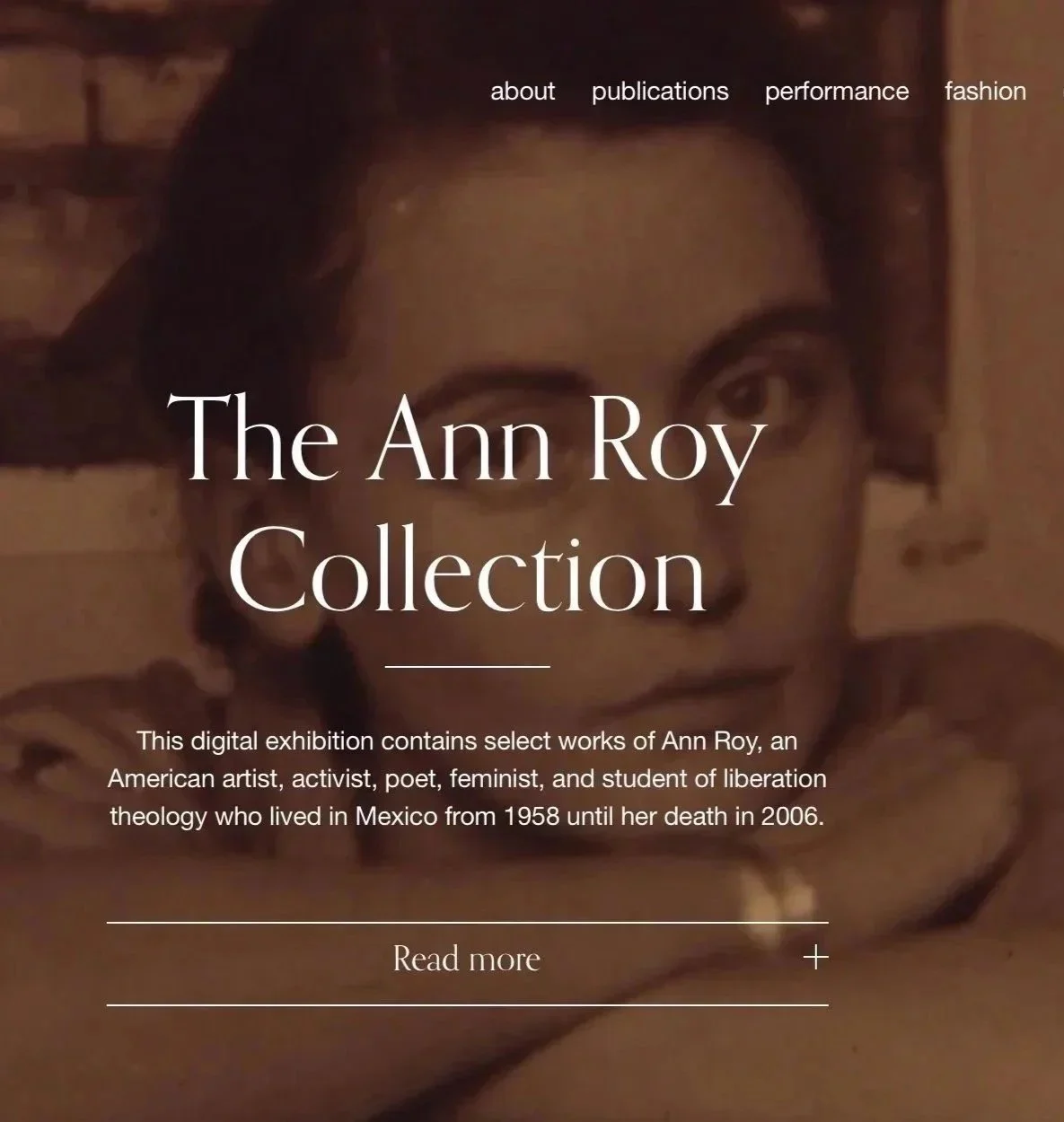
Digital Exhibition
www.theannroycollection.com
Born in Tulsa, Oklahoma, on December 6, 1925, Ann Roy attended Mills College in Oakland, California, where she published her first book, Absolutely Normal, to critical acclaim. The following year, recently married, she traveled with her husband Robert Emmitt, to the Four Corners, White Rock, Utah and the Western slope of Colorado where she recorded important ethnographic conversations with Harriet Tavapaunt, a Northern Ute woman, whose accounts would be included in Emmitt’s book, The Last War Trail. Ann was not credited for her fieldwork in the book. Robert and Ann divorced and soon after she met her second husband, artist John Nevin.
Ann and John spent a year traveling in Italy, Spain, Baleares, France and England, where Ann wrote and they studied painting, drawing and photography. Upon their return, Ann created Return from Rome: A Magic Lantern Show, which she later turned into a slideshow accompanied by recorded bilingual narration.
Ann and John moved to and lived for a brief time in an artist community of Jerome, Arizona, where they had their first son Ian. Soon after, they moved to Guanajuato, Mexico. There Ann worked with local indigenous women, designing and sewing women's and children's clothing. Her designs utilized fabric from the textile mills in nearby San Miguel de Allende and incorporated traditional folklore designs and embroidery. The Marfil Clothing Cooperative produced a line of clothing which Ann sold through her various personal contacts in the United States. While in Guanajuato, Ann assisted in the delivery of 27 babies and gave birth to her second son, Willie.
After the breakup of her second marriage, Ann moved to Tepoztlan, Morelos, a center for international spiritual seekers. There she worked with the astrologer John Starr Cooke and feminist Margaret Fiedler. In Tepoztlán, she produced Super-8 portrait films featuring various people in her community. She also worked with local artist Rita de Tepoztlán in series of photographs of Christa, the female Christ.
Ann began teaching at the Center for Intercultural Documentation (CIDOC), founded by the Austrian Roman Catholic priest, theologian, philosopher, and social critic Ivan Illich, in Cuernavaca. CIDOC was a think tank and free university that attracted intellectuals from North and Latin America, Europe, Catholics and non-Catholics, from the left and the right.
There Ann taught symbol systems (I Ching, Astrology, Tarot) as well as feminist cosmology, and established La Luna Collectiva along with writer, editor and translator Jacqueline Mosio. While at CIDOC, Ann developed the term "patriarchosis," the internalized effect of 4,000 years of patriarchy on an individual and a society. Much of her writing and artwork produced during this time, reflected this idea.
Roy moved from Tepoztlán to Pátzcuar in the state of Michoacán. There she engaged more deeply in political work centered on the Latin American anti-imperialist movement and the liberation theology that formed its ethical base. She met the Mexican journalist Cesar Arias de la Canal and, moved by his book chronicling the grassroots efforts of the Sandinista uprising against the ruling Somoza family, she offered to translate his book The Drums of Monimbo, to English.
Her final move was to San Miguel de Allende to participate in the community of expats, snowbirds, artists and writers. In San Miguel she became involved with the Zapatista movement in Chiapas. Under the nom de plume Fair Witness, she translated Zapatista documents, particularly the writings of Subcommandante Marcos, and attended conferences in the jungle and in several Mexican cities.
It was also in San Miguel de Allende that she took up poetry again, publishing in anthologies and reading publicly in groups like the Live Poets of San Miguel de Allende. She worked closely with Mexican poet Fernando Maqueo, each translating the other's work.
— written by Jamie Wagner and Emilie Upczak
Documentary Short
18’ / 2026 / US
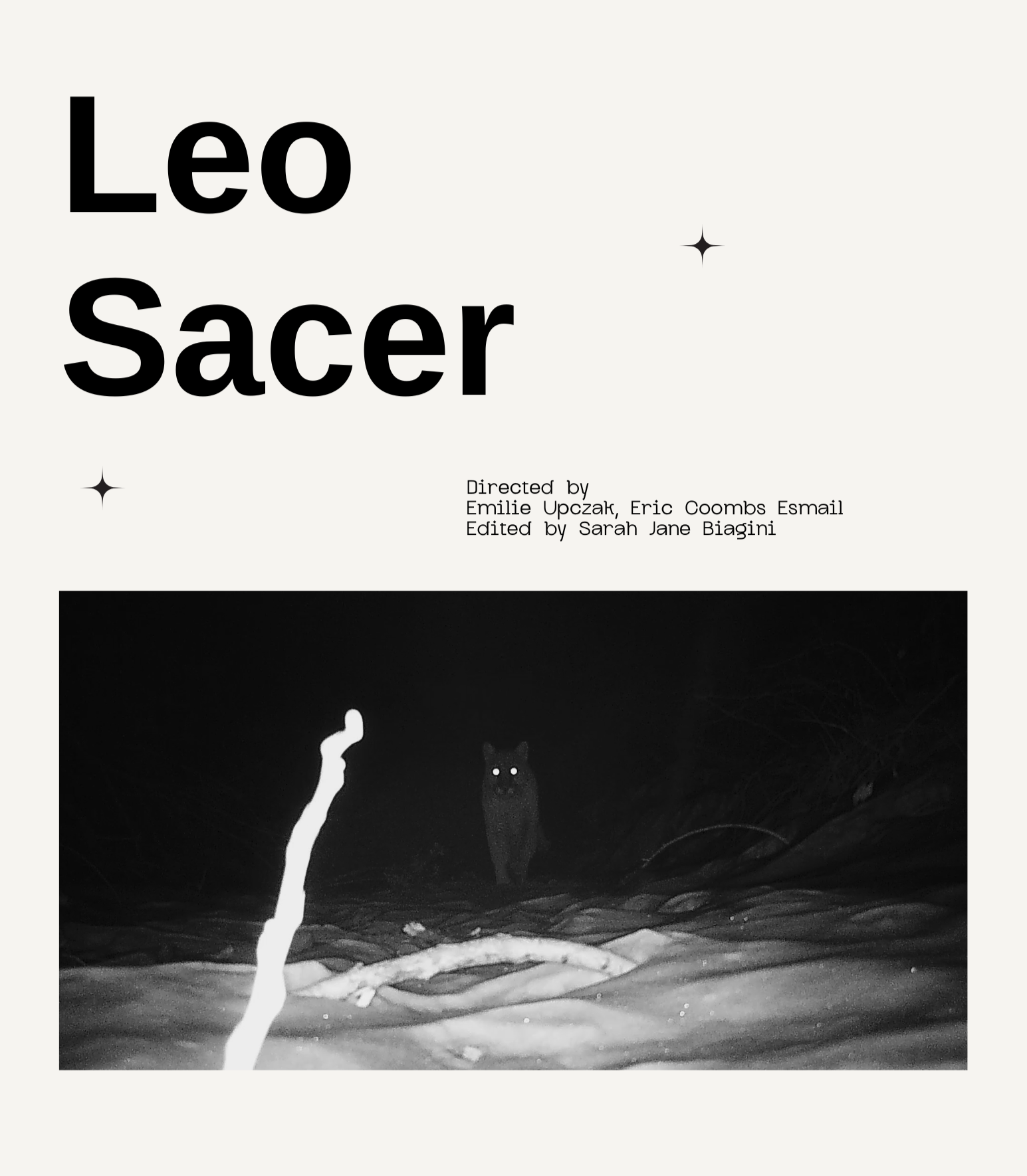
Directed by Emilie Upczak & Eric Coombs Esmail
Edited by Sarah Jane Biagini
LEO SACER tells the story of a mountain lion suspected of killing at least 15 pet dogs in 30 days around Nederland, Colorado. Fearful, angry, and grief-stricken residents recount their encounters with the animal, creating a social environment that leads to dramatic and devastating results. As the story unfolds, questions arise about the nature of pet ownership, human complicity, and how we react to dangerous encounters at the edge of civilization, raising the question: why do the wilderness aesthetics so often celebrated by mountain residents become grounds for justifying ecological violence?
Short Film
10’ / 2022 / US / Drama
English & Navajo with English Subtitles
A botanist grieving the death of a beloved aunt, travels alone to northern Mexico, where she is nourished by images of the last trip they took together traversing the Colorado River.
Writer, Director, Producer Emilie Upczak
Support Provided by the Walton Family Foundation, Puffin Foundation, Illinois Arts Council, New Mexico Film Office, Center for Humanities & the Arts, CU Boulder, Center for Native American and Indigenous Studies, CU Boulder, SAGindie and Helix Collective Music Connect, Federal Emergency Management Agency.
Partners include the Sonoran Institute, Lo-Fi Productions LLC, Full Spectrum Features, Redline Contemporary Art Center, Flashpoint Chicago, a campus of Columbia College Hollywood, Mimesis Center for Documentary and Ethnographic Media, CU Boulder, Department of Cinema Studies and Moving Image Arts, CU Boulder.
Filmed on Location in the State of New Mexico
Photo credit: Laura Conway
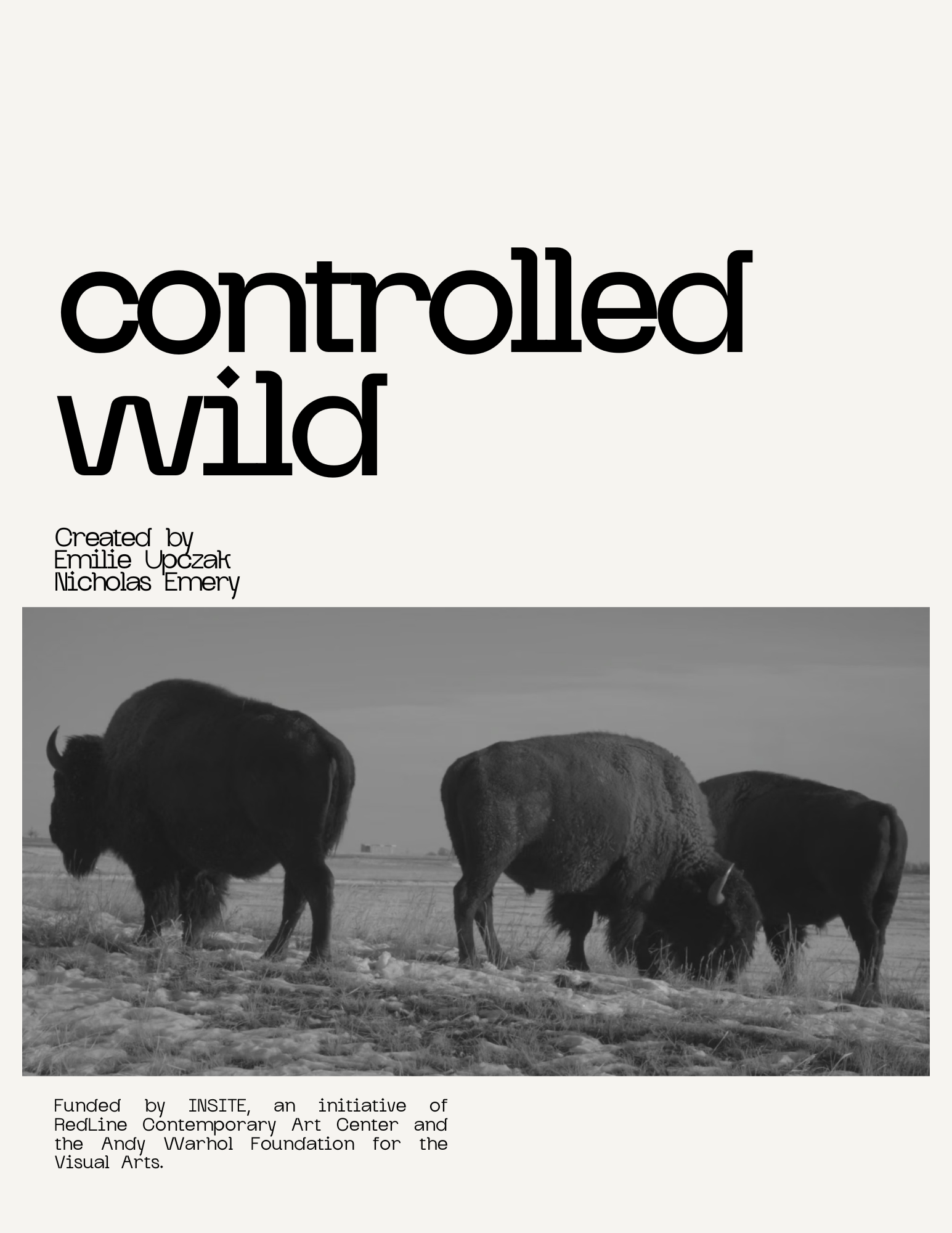
This film explores human industry, expansion, boundaries, public and private land, wildlife, and wildlife corridors in the west.
The idea originated as paintings by Nicholas Emery, which articulate contemporary urban realities that are themselves the legacy of historical industrial decisions that began in the late 1800’s in the west. In these paintings oil refineries, power lines, railroad lines, buildings, and barbed wire are juxtaposed with vast sprawling prairies, buffalo, elk, and wolves, that causes a dualistic tension.
Emery began collaborating with filmmaker Emilie Upczak, who herself was making experimental shorts, and asking questions about identity and the land.
Together they work to visually explore the tensions inherent in the intersection of the natural world and human industrial endeavor.
Sound Design by Leland Burchmore
Funded by INSITE, an initiative of RedLine Contemporary Art Center and the Andy Warhol Foundation for the Visual Arts.
Partners include the Rocky Mountain Arsenal National Wildlife Refuge and the University of Colorado Boulder Department of Cinema Studies and Moving Image Arts.
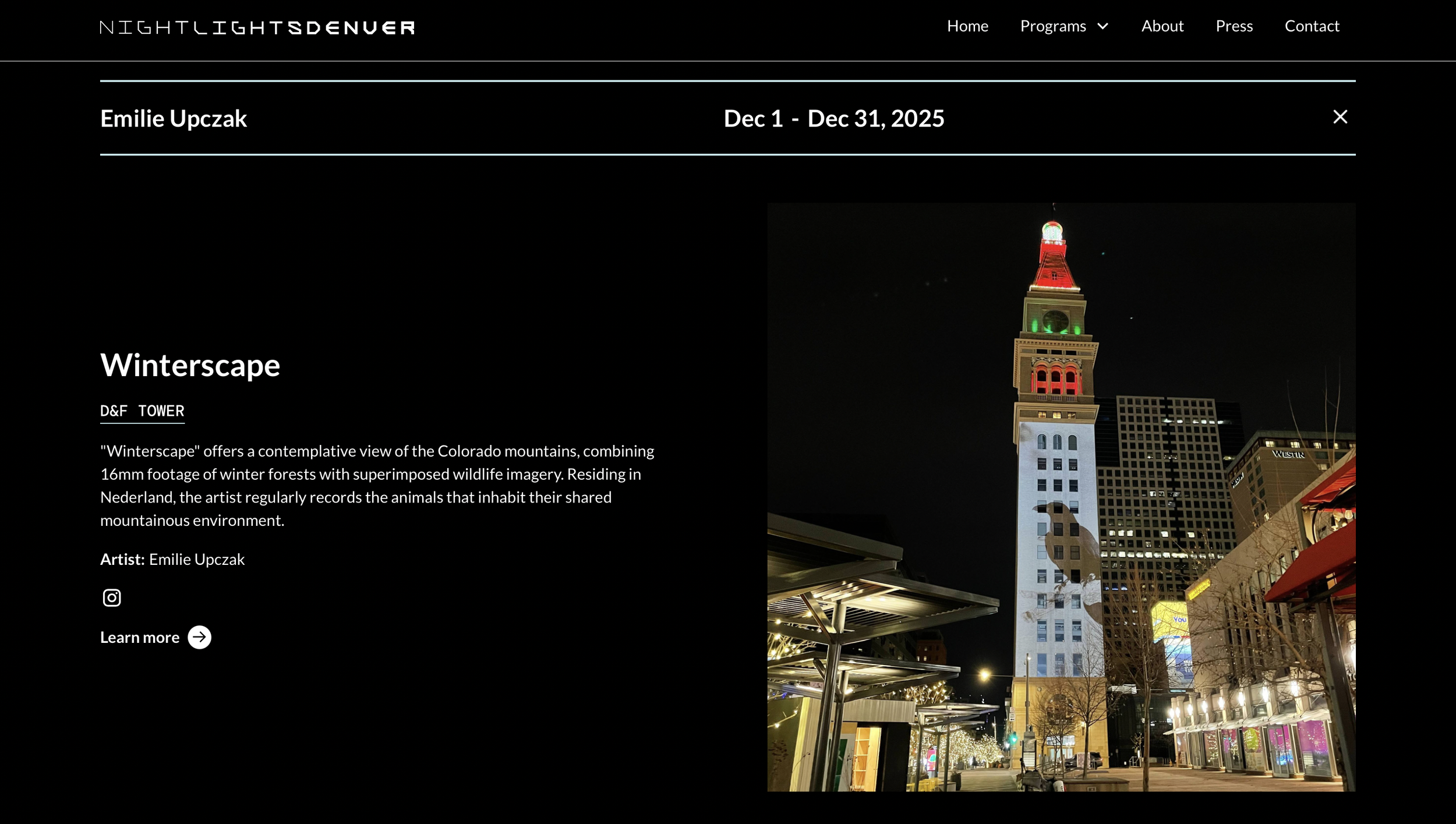
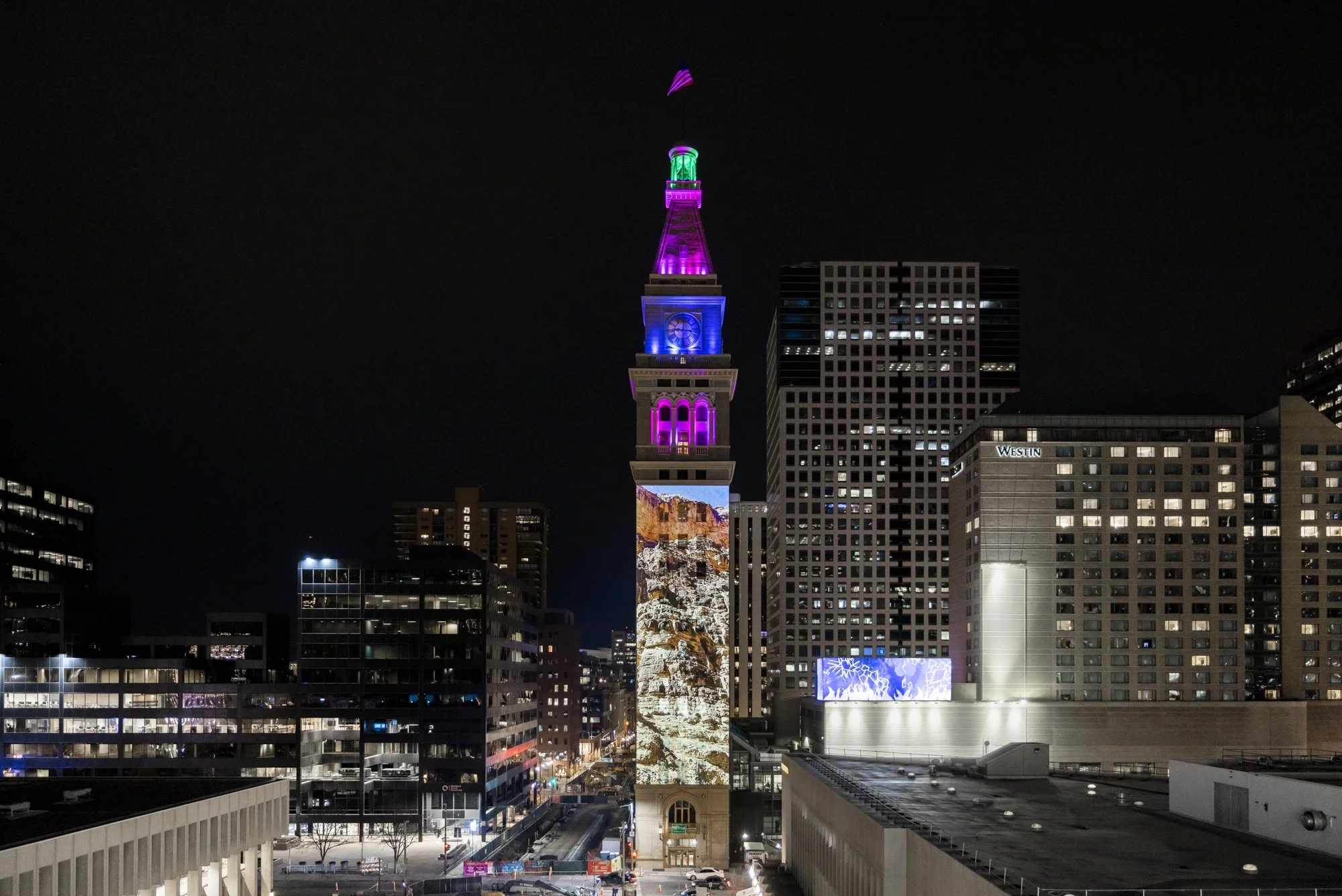
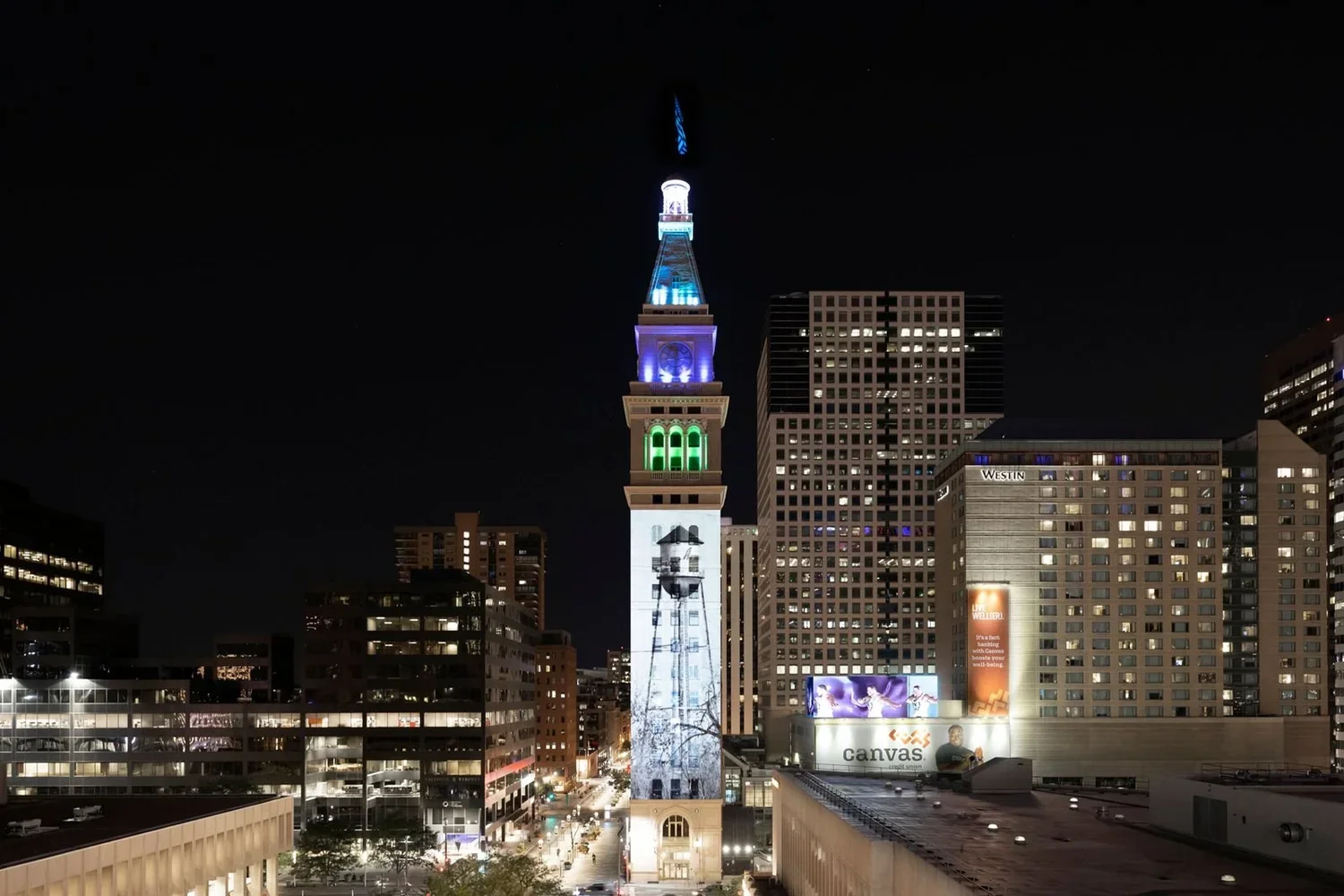
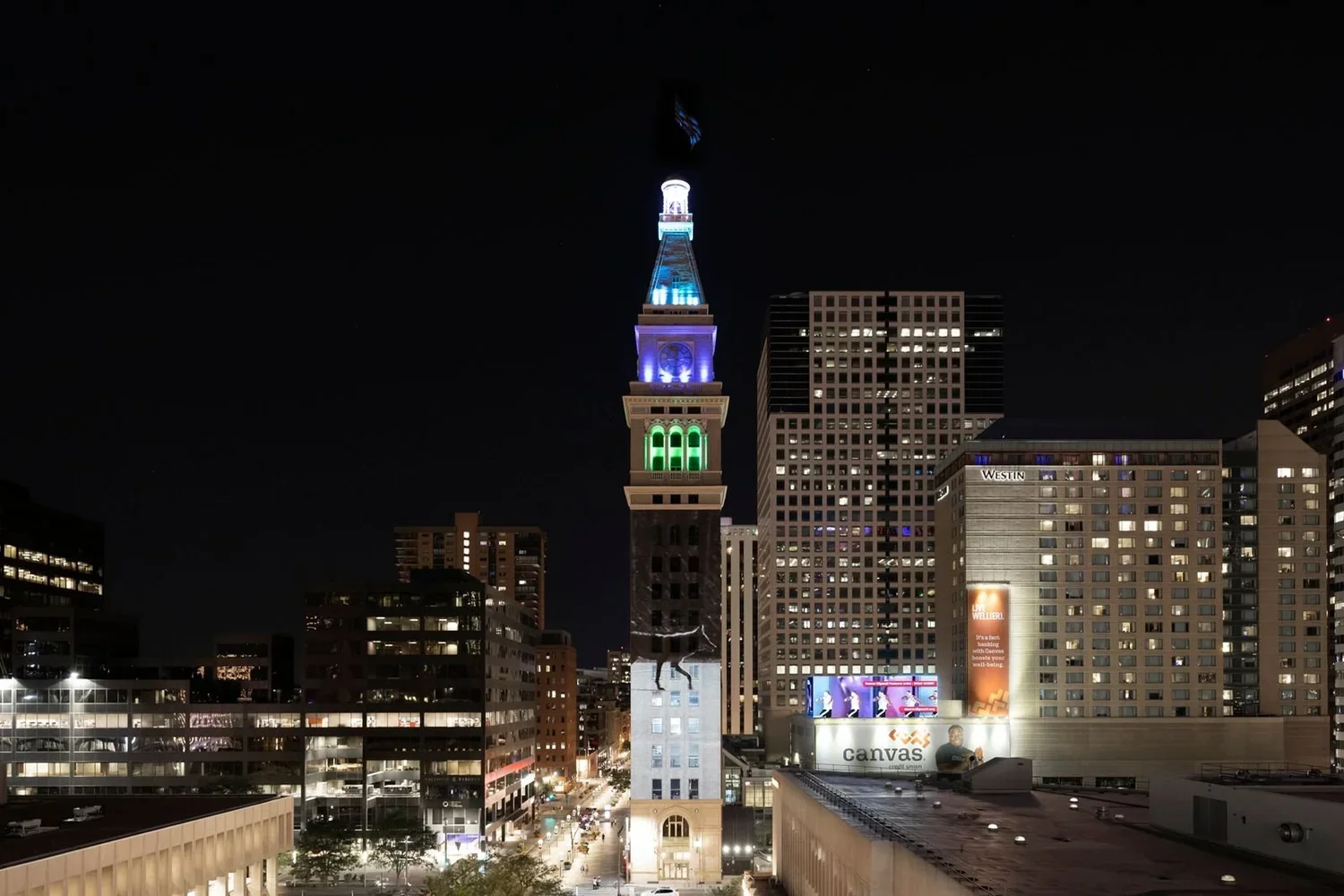
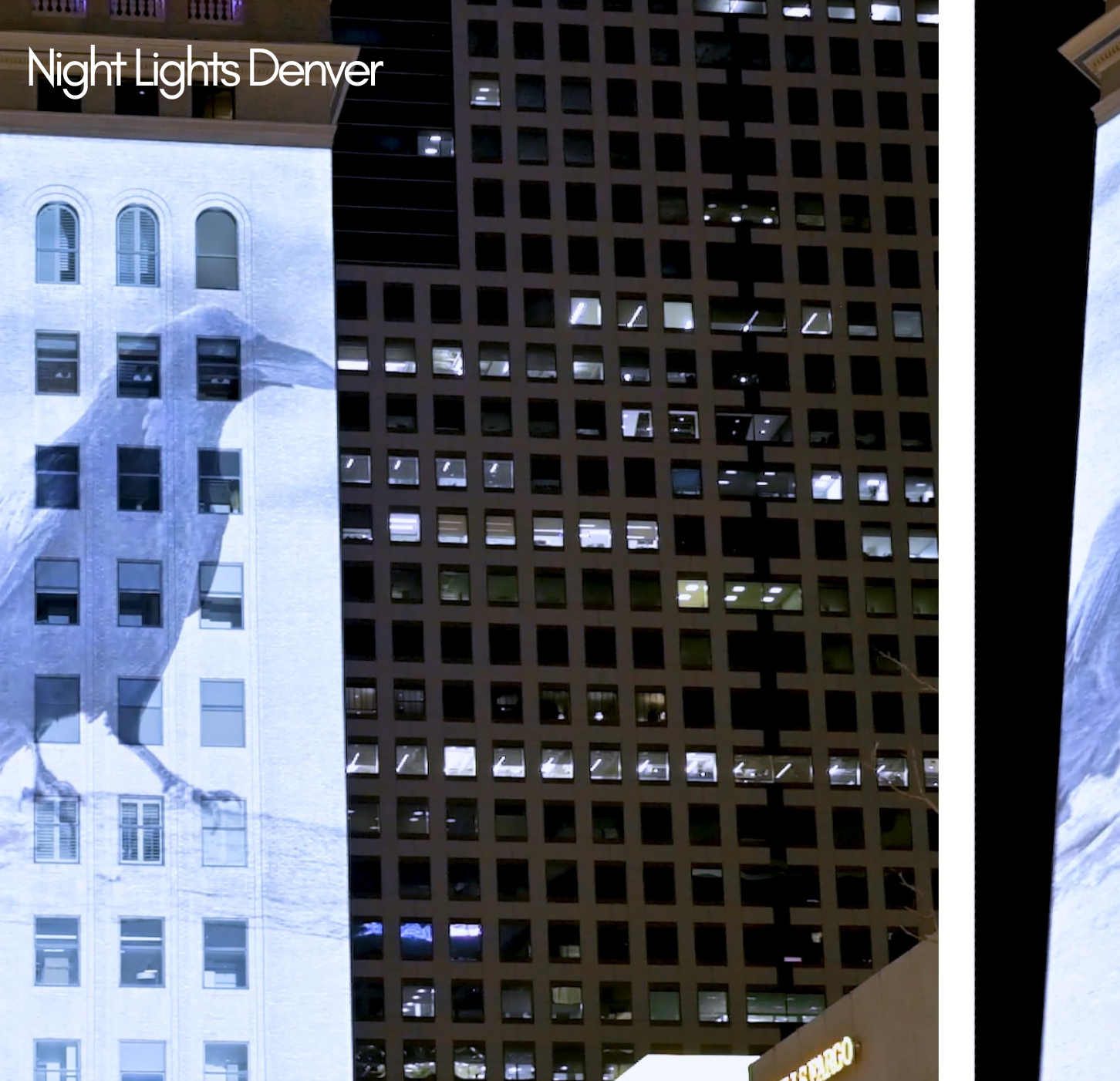
Night Lights Denver is a collection of light and projection-based art installations throughout Downtown Denver.
Winterscape offers a contemplative view of the Colorado mountains, combining 16mm footage of winter forests with superimposed wildlife imagery. Residing in Nederland, the artist regularly records the animals that inhabit their shared mountainous environment.
A meditation on the Colorado River corridor through the Grand Canyon. These moving images were collected over the course of a 10-day white water rafting trip in June 2023. Only 1% of the 5 million people who visit the Grand Canyon each year go below the rim. The installation invites the viewer to experience spaces along the Colorado River that are rarely seen, inaccessible by road or plane.
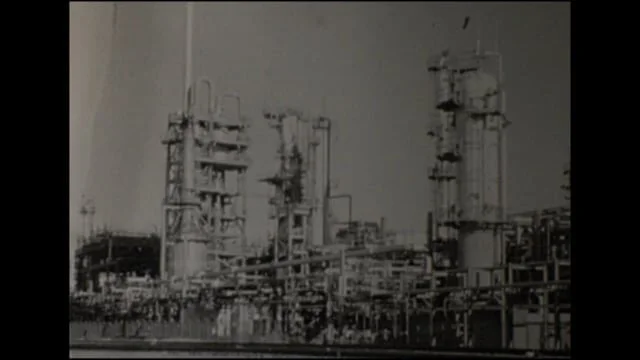
A film that explores human industry, expansion, boundaries, public and private land, wildlife, and wildlife corridors in the west. The film visually explores the tensions inherent in the intersection of the natural world and human industrial endeavor. Made with visual artist, Nicholas Emery.
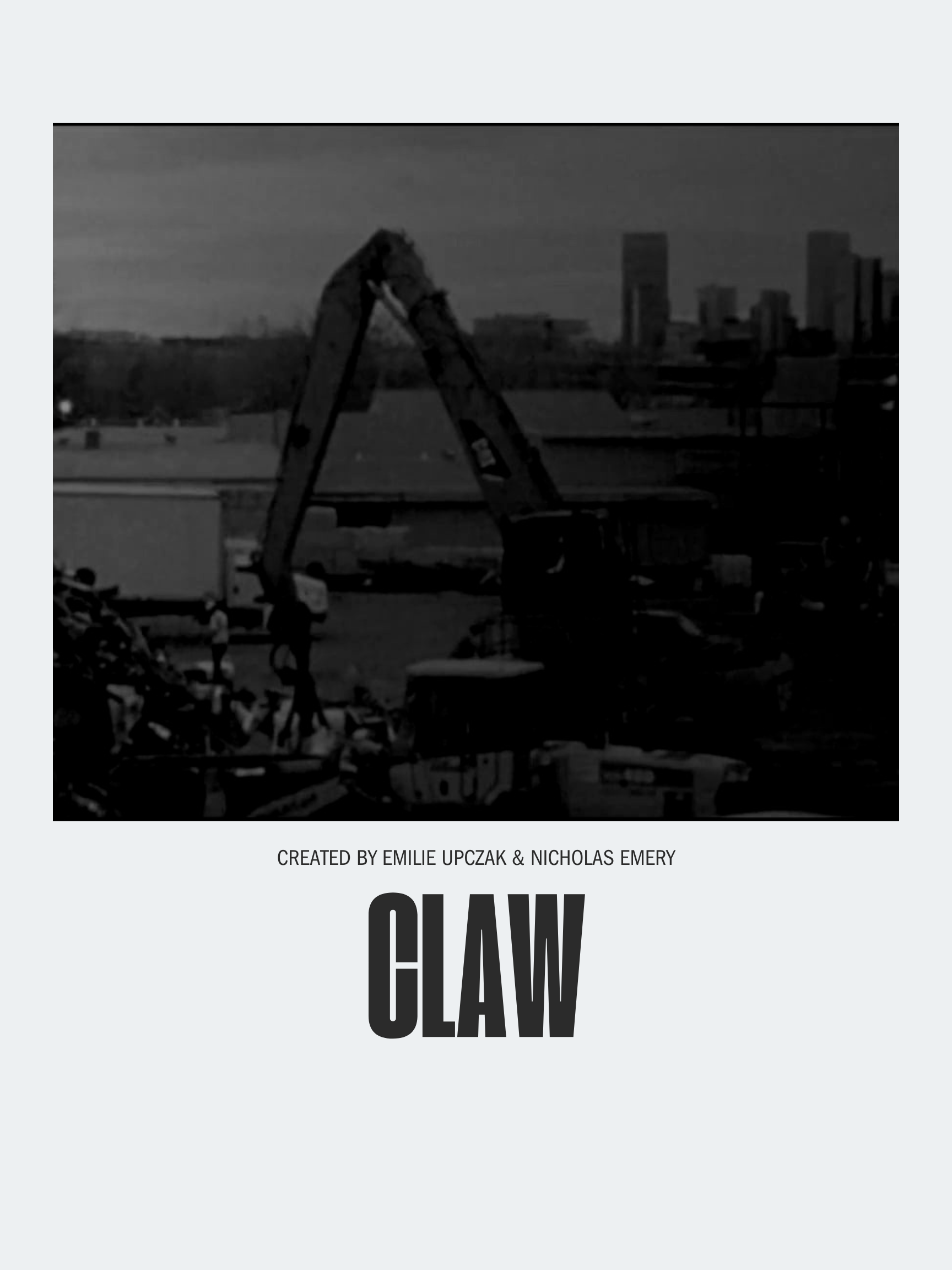
A Super 8 film collaboration between Nicholas Emery and Emilie Upczak that explores the industrial sector of Denver and the wild spaces of Rocky Mountain Arsenal.
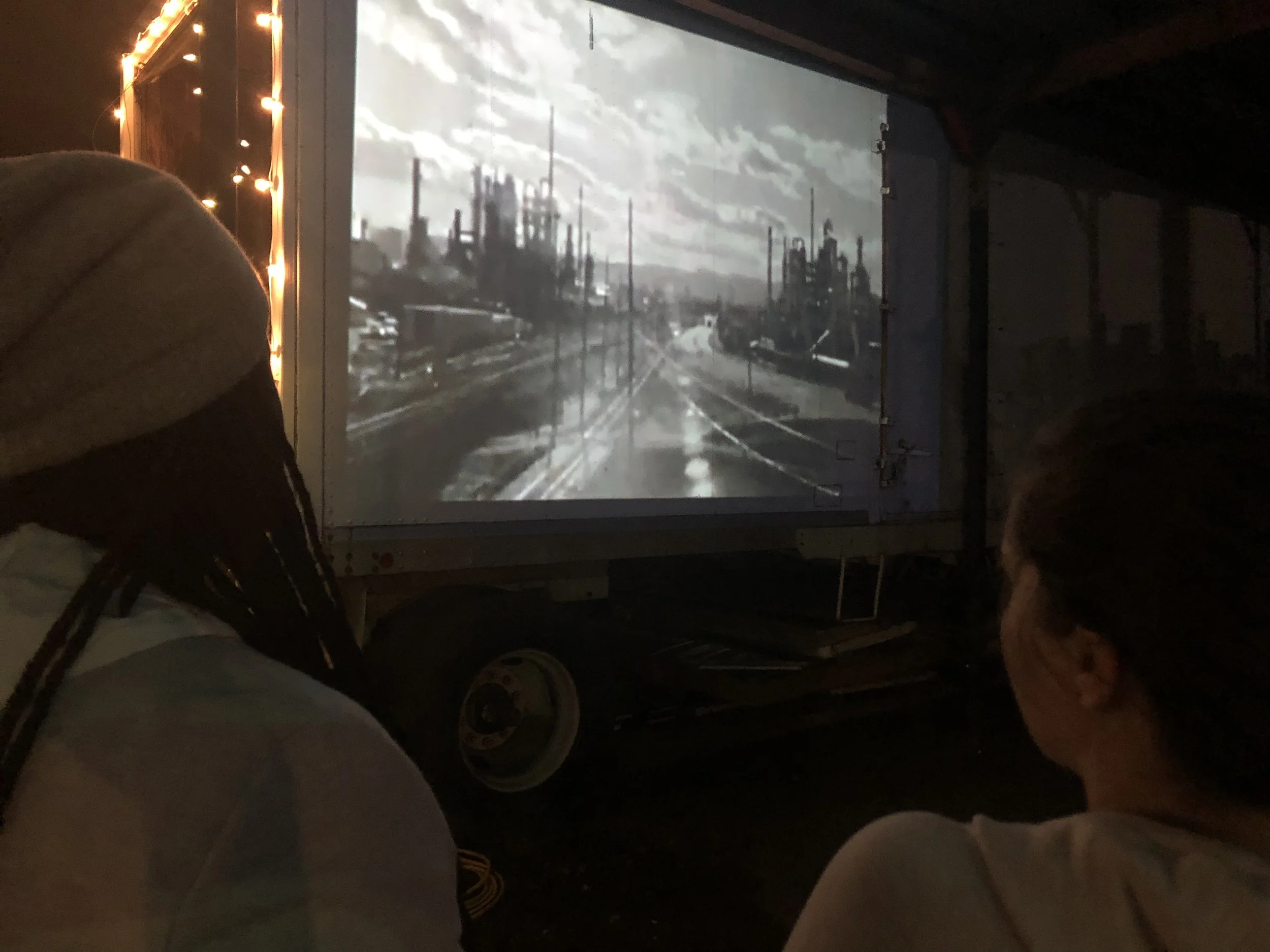
Public projection onto a container for the AXIS pop-up event, Globeville River Arts Center, Denver, 2018.
This documentary short “wining” as a dance language with a history and identity born out of the Caribbean experience. In particular, it looks at the body in motion as well as elements of Trinidadian society that are represented in the way people dance and the various ethnic influences on the dance itself.
The city streets of Port of Spain, and its varied cast of characters are the backdrop for this spoofy Trini-style-neo-noir. Philo, an expat detective turns to his previous partner Monique for help in solving a current high profile kidnapping case. But where this leads them is to the past, and an old rift between them regarding the disappearance of her brother, which Philo seeks to mend.
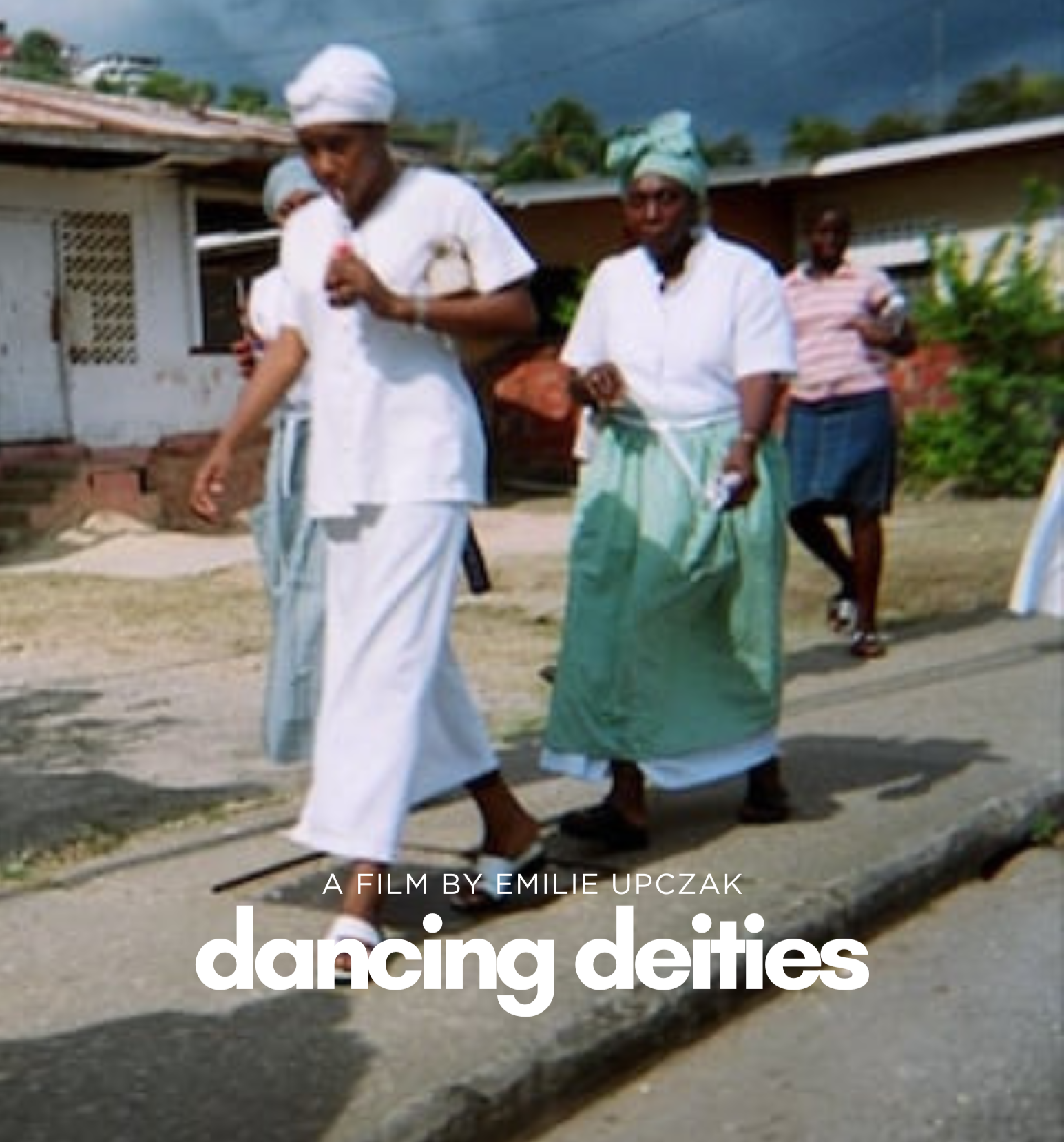
Dancing Deities is a documentary short that explores the music, dance and mythology of a rural Orisha community in Trinidad and Tobago.
Filmmaker Magazine
by Dan Mirvish and Emilie Upczak in Festivals & Events on Mar 4, 2019
Project Director for Caribbean Film Database (CFDb) – the largest single source of information on films produced in and about the Caribbean, defined here as the insular Caribbean plus Belize, Guyana, Suriname and French Guiana. As of its launch in September 2015, the CFDb houses information on more than 900 films from the English, Dutch, French and Spanish-speaking Caribbean. The project was initially supported by the ACP Cultures+ Programme, funded by the European Union.
Review of the film “Eat, for This Is My Body”, directed by Michelange Quay. Written for the CRB: Caribbean Review of Books. 2008.